
HomeCategory

Lab News

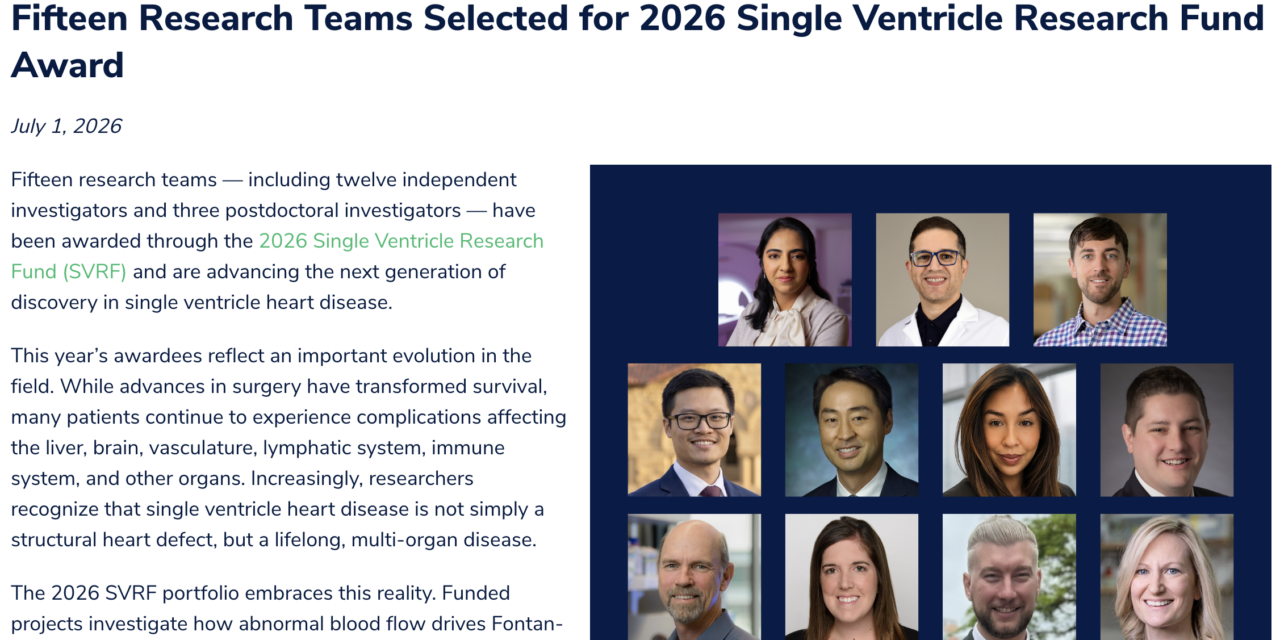
Shiwarski Lab Receives 2026 Additional Ventures Single Ventricle Research Fund Award

The Shiwarski Tissue Engineering Lab is honored to receive a 2026 Single Ventricle Research Fund (SVRF) Award from Additional Ventures. Our project, “Advancing Fontan Patient Longevity Through Mechanistic Insights into Liver Dysfunction and Thrombosis Using 3D Bioprinted Model Systems,” was selected as one of fifteen teams in this year’s cohort and joins an outstanding group...
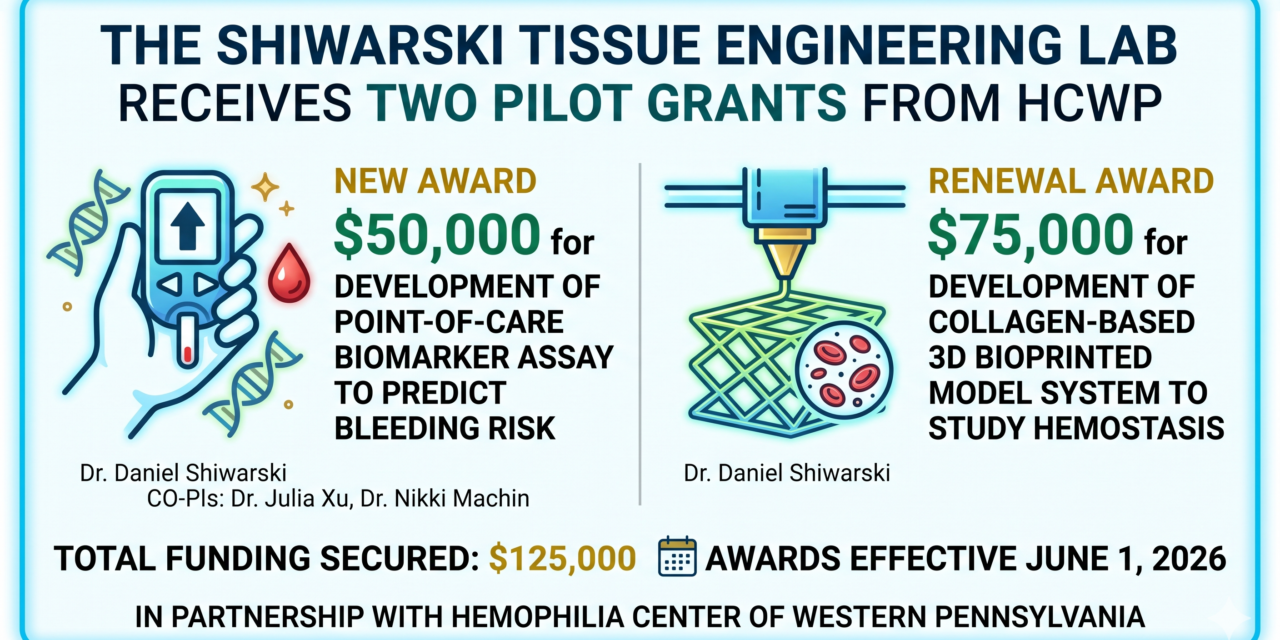
Shiwarski Lab Awarded Two HCWP Pilot Grants to Advance Bleeding and Clotting Disorder Research

The Shiwarski Tissue Engineering Lab has secured two pilot grants from the Hemophilia Center of Western Pennsylvania (HCWP) through the P3HVB Pilot Grant program. Both awards take effect June 1, 2026, and together expand the lab’s research into hemostasis and inherited bleeding and clotting disorders. The first award provides $50,000 for the project “Development of...

An Open Source Breakthrough in Hemodynamics

Pitt Swanson School of Engineering Virtual Newsroom  ·  February 2, 2026 Coverage of HemoLens, the Shiwarski Lab’s open-source 3D-printed pressure myography system developed for under $750. HemoLens enables physiological characterization of native and bioprinted blood vessels, lowering barriers to vascular research and hemodynamics studies worldwide. Article Link: https://news.engineering.pitt.edu/an-open-source-breakthrough-in-hemodynamics/  

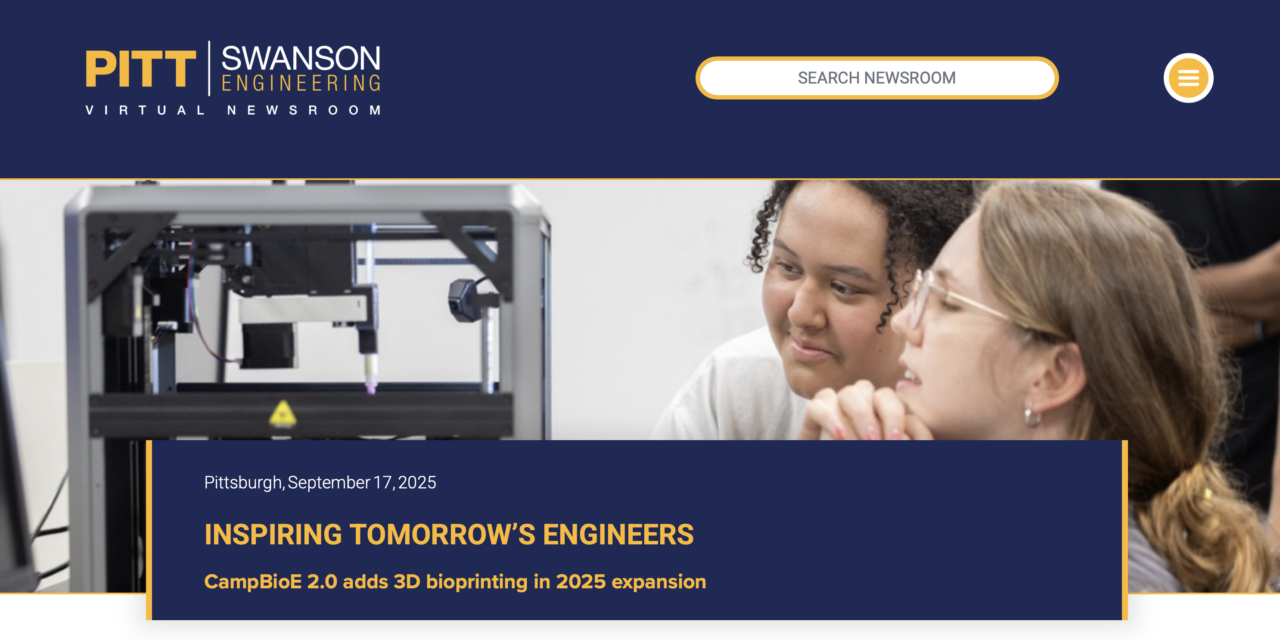
Inspiring Tomorrow’s Engineers

Pitt Swanson School of Engineering Virtual Newsroom  ·  September 17, 2025 Feature on CampBioE 2.0, Dr. Shiwarski’s expanded K-12 bioengineering outreach program at Homewood’s Community Engagement Center. The 2025 program added hands-on 3D bioprinting modules, introducing students from grades 2–12 to tissue engineering and biomedical research concepts. Article Link: https://news.engineering.pitt.edu/inspiring-tomorrows-engineers/

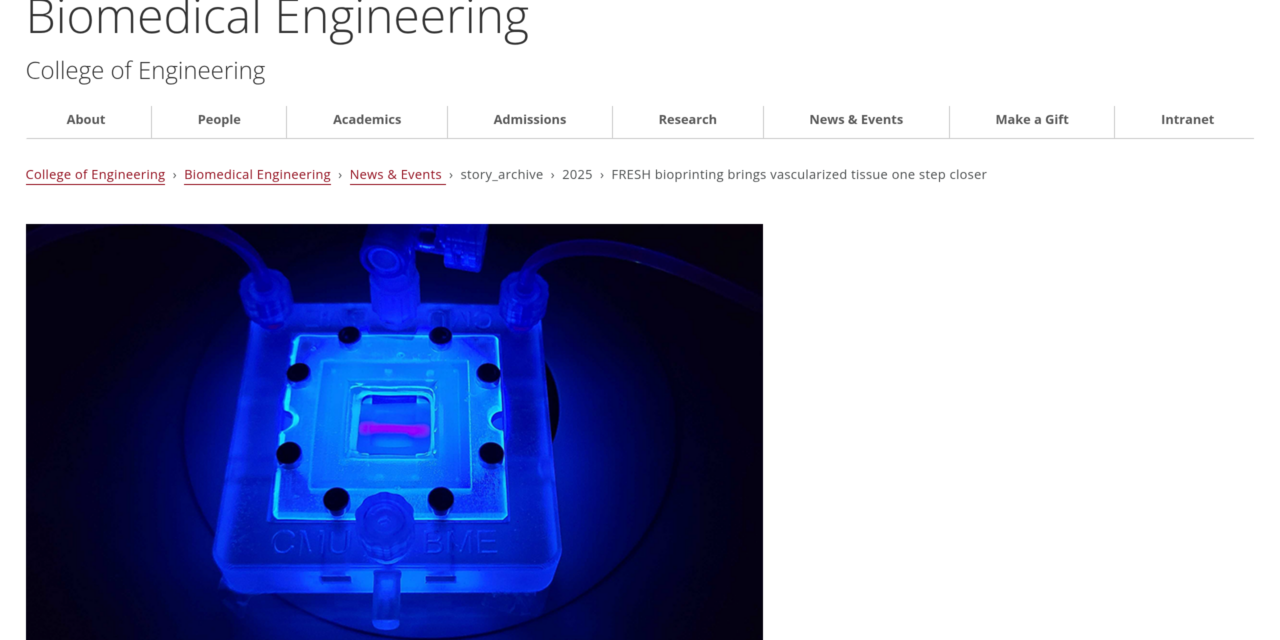
FRESH Bioprinting Brings Vascularized Tissue One Step Closer

Carnegie Mellon College of Engineering  ·  April 23, 2025 CMU highlighted advances in FRESH 3D bioprinting enabling fully collagen-based microphysiologic systems with sub-100-micron vascular channels. The work overcomes longstanding limitations of synthetic materials in organ-on-chip platforms, allowing cells to function in a native biological environment. Article Link: https://www.cmu.edu/bme/News_Events/story_archive/2025/bioprinting-tissue.html

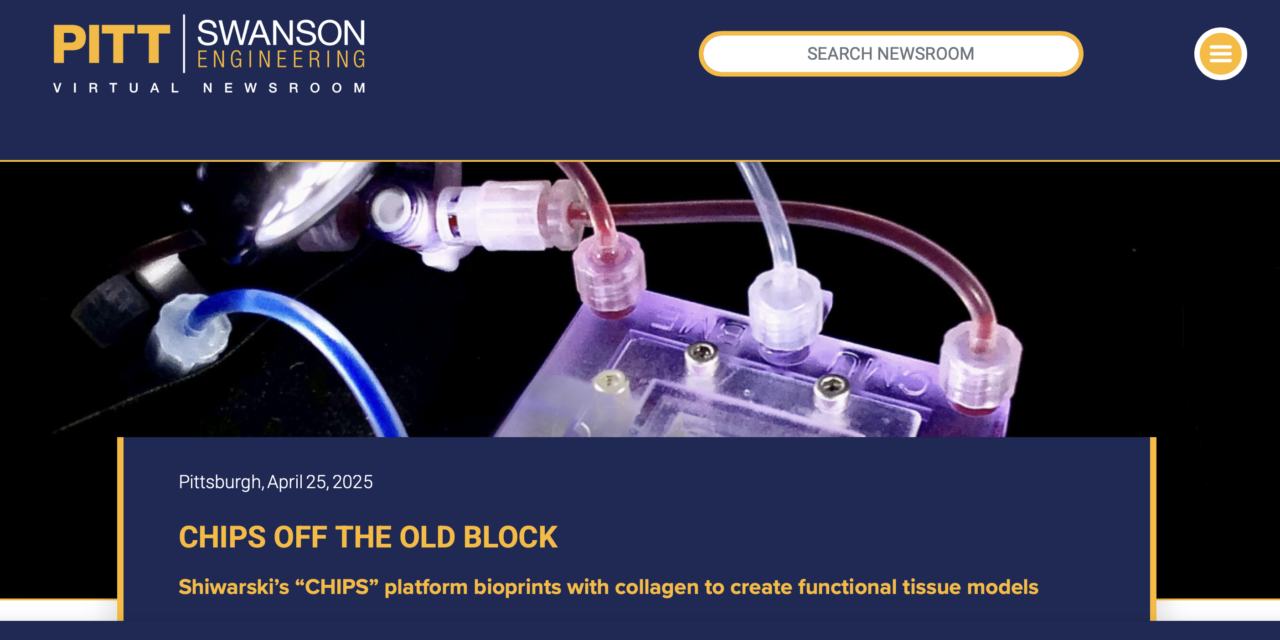
CHIPS Off The Old Block

Pitt Swanson School of Engineering Virtual Newsroom  ·  April 25, 2025 Coverage of the Shiwarski Lab’s CHIPS (Collagen High-resolution Internally Perfusable Scaffolds) platform — a 3D bioprinted collagen-based microfluidic system for engineering fully biologic, perfusable tissue constructs published in Science Advances. Article Link: https://news.engineering.pitt.edu/chips-off-the-old-block/

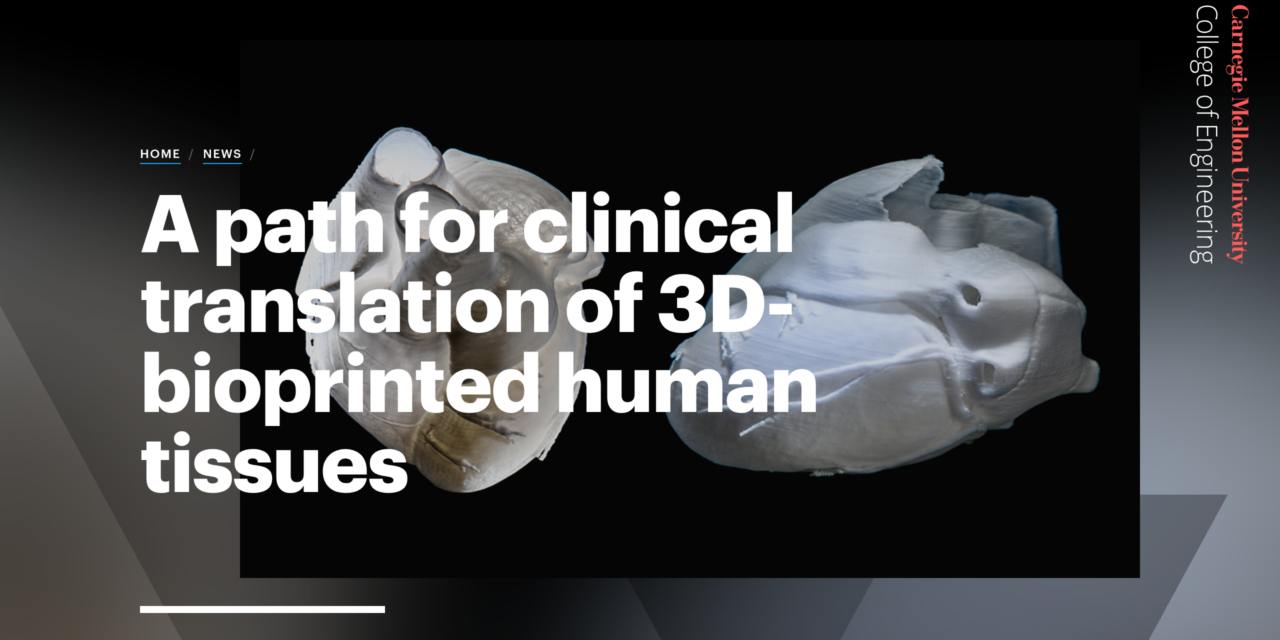
A Path for Clinical Translation of 3D-bioprinted Human Tissues

Carnegie Mellon University News Release  ·  By Sara Vaccar  ·  October 10, 2022 Coverage of a perspectives piece by CMU’s Regenerative Biomaterials and Therapeutics Group examining the core technical and regulatory challenges facing 3D bioprinting, and identifying the essential milestones required to translate bioprinted tissues to clinical use. Article Link: https://engineering.cmu.edu/news-events/news/2022/10/18-3d-bioprinted-tissues.html  

Protein Droplets Help Cells Respond to Osmotic Stress

Chemical & Engineering News  ·  By Laurel Oldach  ·  November 9, 2022 Chemical & Engineering News covered the discovery that WNK1 protein droplets — liquid-like biomolecular condensates — help cells detect and respond to osmotic stress, with Dr. Shiwarski as a key contributor to this interdisciplinary Pitt/CMU research. Article Link: https://cen.acs.org/biological-chemistry/biochemistry/Protein-droplets-help-cells-respond-osmotic-stress/100/web/2022/11

Crowded Rooms: How Pitt and Carnegie Mellon Researchers Solved a Decades-Old Mystery

UPMC Press Release  ·  By Julia O’Brien, Ph.D., R.N.  ·  October 31, 2022 Pitt and CMU researchers, including Dr. Shiwarski and collaborators from the Subramanya lab, discovered how cells sense molecular crowding and regulate volume through WNK1 protein condensates — resolving a longstanding question in cell biology with implications for kidney disease and osmotic stress...

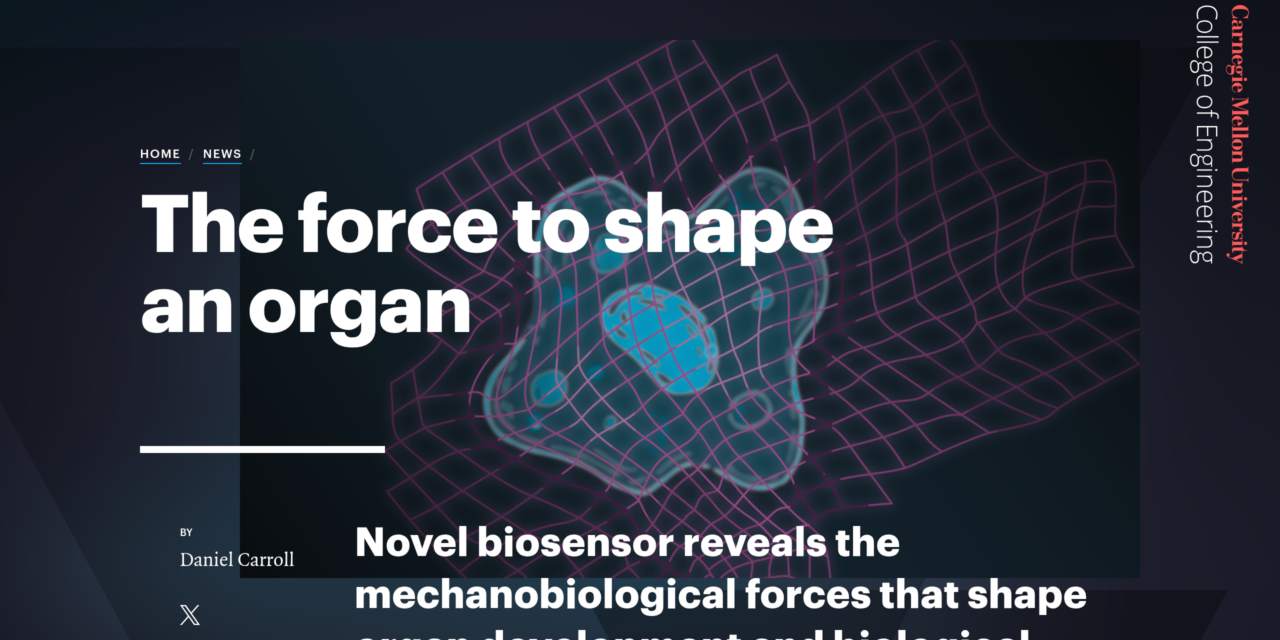
The Force to Shape an Organ

Carnegie Mellon University News Release  ·  By Daniel Carroll  ·  December 11, 2020 Dr. Shiwarski, then a postdoctoral fellow in the Feinberg lab, co-developed a novel biosensor that reveals the mechanobiological forces shaping organ development. The sensor enables measurement of previously uncharacterized forces relevant to conditions such as hypertension and organ morphogenesis. Article Link: https://engineering.cmu.edu/news-events/news/2020/12/11-shape-an-organ.html