

In our work, we focus on developing accessible, high-performance tools and platforms that democratize biofabrication and enhance biomedical research.
An open-source philosophy in bioengineering and research advancement emphasizes transparency, collaboration, and accessibility. It promotes freely sharing data, designs, tools, and findings, allowing researchers worldwide to build on each other’s work. This approach accelerates innovation, reduces duplication, lowers barriers to entry, and fosters a more inclusive scientific community. In bioengineering and 3D bioprinting, open-source models lead to faster development of technologies like FRESH bioprinting, 3D printer design, multi-material capabilities, and universal access to research capabilities by lowering the cost of equipment acquisition, ultimately advancing both science and public health.
Mission: We hope that this site can help to aggregate our open-source projects to allow efficient adoption and improvement of our technology.
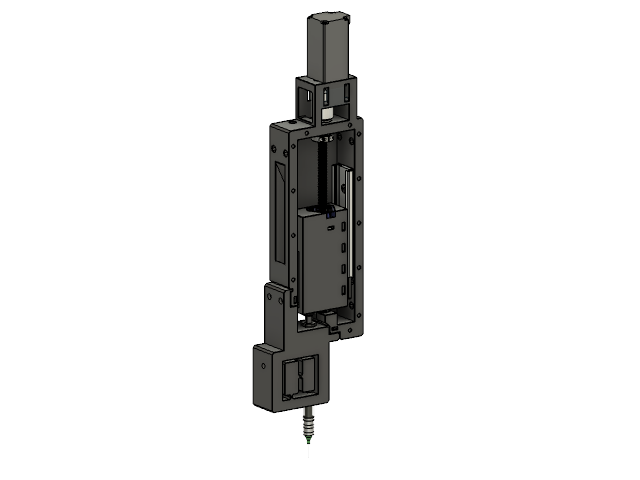
The Replistruder 5 is the newest and highest performance iteration of extrusion-based syringe pumps we have developed for FRESH 3D bioprinting. It achieves nanoliter control of material deposition at an affordable cost. It was an essential technical advance that enabled the creation of Collagen-based High-resolution Internally Perfusable Scaffolds (CHIPS) published in Science Advances in 2025.
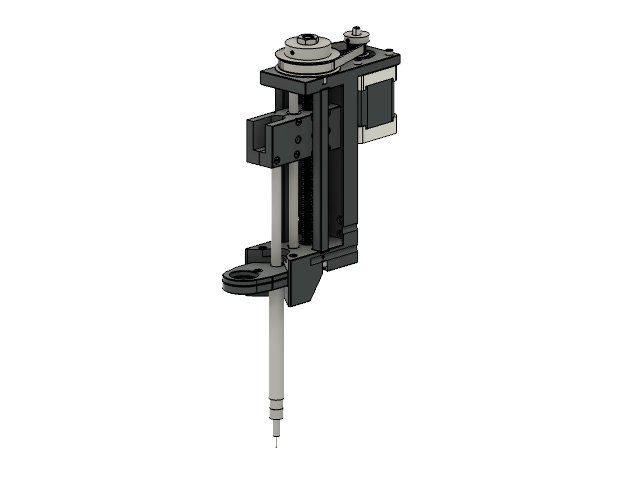
The Replistruder 4 takes advantage of the geometry customizability and ease of 3D plastic printing while improving performance by integrating mass produced high-precision linear motion components. Simultaneously this new syringe pump remains compact and lightweight enough for several to be utilized on a 3D bioprinter for multimaterial bioprinting. To facilitate multiple use cases the Replistruder 4 is compatible with a range of syringes including disposable BD and Hamilton gastight syringes. Has been used on a variety of 3D printers (MakerGear, Flashfordge, LulzBot, Ender, etc). Published in HardwareX.
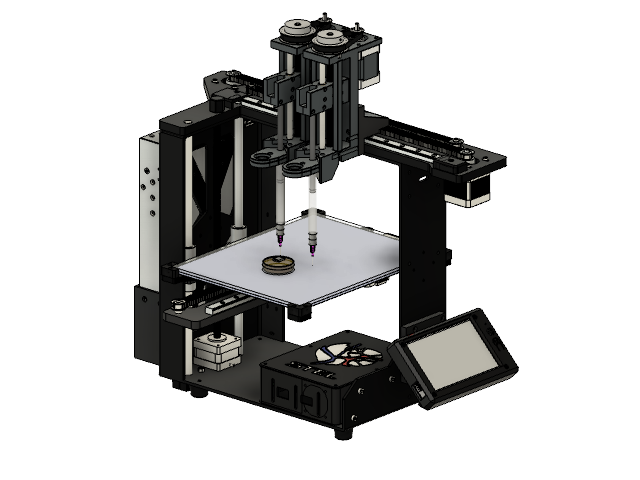
The MakerGear M2 Dual Rep4 3D bioprinter is a desktop plastic printer conversion performed by removing the control board of the printer and replacing it with a Duet 2 WiFi board with a PanelDue 5i touch screen controller (Duet3D, UK). The Duet WiFi board utilizes a preinstalled RepRapFirmware and is compatible with all open-source 3D printing software. This board, in conjunction with the Replistruder 4 syringe pumps, allows for automated two material printing. The printer is easily transported and can fit into a biosafety cabinet for sterile bioprinting.
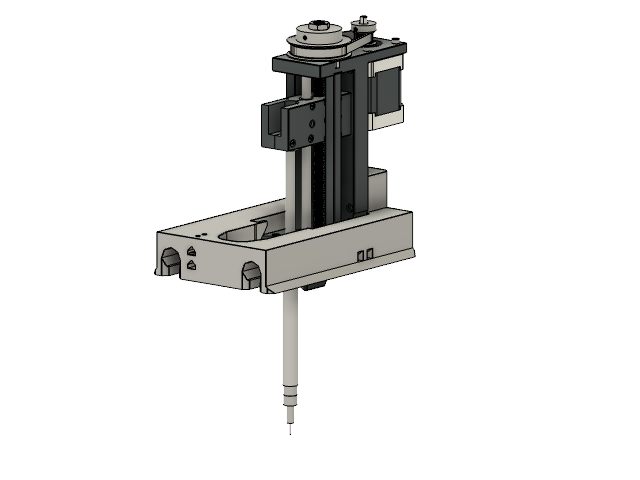
Extruder Carriage and Replistruder 4 mount for FlashFordge FInder. Here we convert a low-cost 3D printer, the FlashForge Finder, into a bioprinter using our Replistruder 4 syringe pump and the Duet3D Duet 2 WiFi for total cost of less than $900. We demonstrate that the accuracy of the bioprinter’s travel is better than 35 µm in all three axes and quantify fidelity by printing square lattice collagen scaffolds with average errors less than 2%. All components we have designed for the bioprinter conversion are provided as open-source 3D models, along with instructions for further modifying the bioprinter for additional use cases, resulting in a comprehensive guide for the bioprinting field.
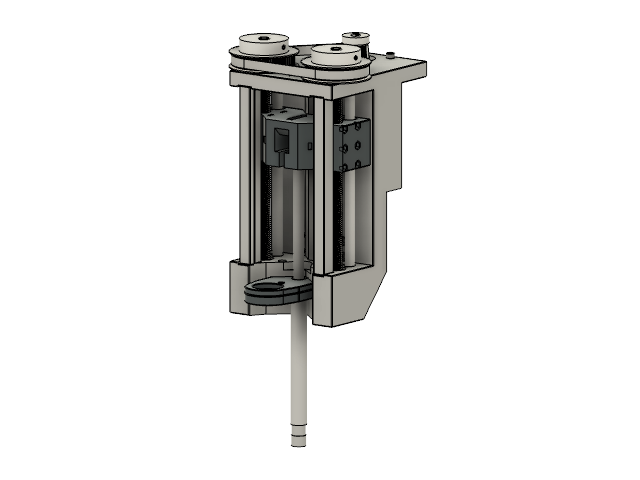
The Replistruder 4 High Viscosity, was created to expand the volume and capabilities of the original Replistruder 4. This design has increased rigidity and incorporates 2 lead screws with a carriage that straddles the syringe plunger to eliminate the cantilever geometry. In conjunction with a larger stepper motor, these changes allow for printing higher viscosity soft materials with smaller diameter needle tips.
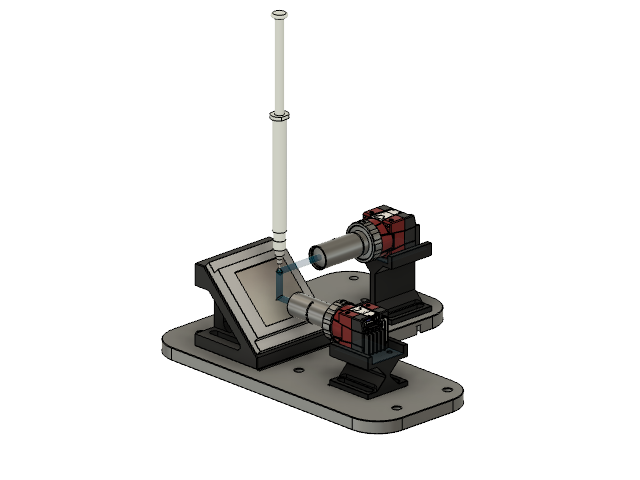
To align multiple needles with micrometer accuracy, we created a custom dual camera optical alignment system. Briefly, two 1×, 40- mm WD CompactTL Telecentric C- mount Lens (Edmund Optics, #63- 745) were mounted to Alvium 1800 U- 500 (Allied Vision) USB cameras. A custom 3D- printed alignment plate and XY positioning system allowed for focus adjustment to achieve parfocality. To image the bottom needle tip to obtain the XY position and needle diameter, a mirror (Thorlabs, ME2S- G01) was mounted at a 45° angle. The second camera was mounted perpendicular to the XY camera to view the side profile of the needle tip for Z- height alignment. A custom LabView program was written to simultaneously view the XY and Z positions.

Pressure myography remains the most widely used ex vivo technique for the characterization of blood vessel mechanics. Providing critical information on burst pressure and vasoreactivity, myography plays a central role in advancing engineered vascular alternatives and evaluating therapeutic efficacy. Commercial systems can cost upwards of $40,000 per unit, making them inaccessible to many researchers. While open-source alternatives exist, they often lack customization and remain prohibitively expensive due to reliance on additional microscopy systems and CNC machining. Here we developed HemoLens, a myography platform that is cost-effective without compromising capabilities or performance to enable standard pressure myography and dynamic pressure testing for <$750.
This is a customizable and modular platform used for mechanical characterization of native or engineered blood vessels. Hemolens achieves cost reduction and performance improvement by utilizing 3D printing approaches, single board computers, affordable cMOS cameras, magnetic attachment, and affordable linear motion components.

For applications that need fine control over light illumination such as small diameter vessels (<200 µm) we needed to create a dimmable light diffusion system. Using parts sourced from Amazon.com we were able to construct a full LED-based illumination platform for around $20. Minor soldering to the LED bulb might be required depending on the LEDs chosen. Links to the materials can be found below. This is compatible with HemoLens via the addition on the increased height base legs.
GOMING DC 5V 12V 24V 30A RF LED Dimmer PWM Dimming Controller – $12

Some cheap perfusion pumps do not come with an enclosure. For the pumps listed in the HemoLens build guide we have created a 3D printable case that includes 2 DC motor potentiometer adjustments for variable speed control.

To adjust the dynamic pressure using the RAMP system we created a series of variable length RAMP arms. Depending on the type of tubing being used, this allows for precise adjustment of the beat to beat mmHg change in pulsatile pressure. We also created a set of 3D printable stands for ease of storage.

We have developed a 3D printed Open source Biaxial Stretcher (OBS) to be a low-cost stage top mountable biaxial stretching system for use with live cell fluorescence microscopy in both upright and inverted microscope configurations. Our OBS takes advantage of readily available open source desktop 3D printer hardware and software to deliver a fully motorized high precision (10 ± 0.5 µm movement accuracy) low cost biaxial stretching device capable of 4.5 cm of XY travel with a touch screen control panel, and an integrated heated platform with sample bath to maintain cell and tissue viability.

Custom Open-Source K-Frame Microscope Heated Stage Insert
The Shiwarski Tissue Engineering Lab has developed a custom open-source K-frame microscope heated stage insertengineered for intravital upright confocal imaging in mice. The platform features integrated temperature-controlled heating, multiple tie-down points for stable limb and tissue positioning, and modular vascular window mounting hardware compatible with chronic or acute imaging preparations. This insert enables high-resolution, real-time visualization of hemodynamic changes and vascular blood flow dynamics while maintaining physiological stability during imaging sessions. All design files and hardware specifications are openly available to support reproducibility and adoption across the research community. Please contact us if you are interested in building for yourself.
Shiwarski Tissue Engineering Lab
University of Pittsburgh
Bioengineering and Medicine
Vascular Medicine Institute
© 2024 STEL. All rights reserved