Five engineers across three institutions, plus a distributed network of testers who broke early versions and said why.
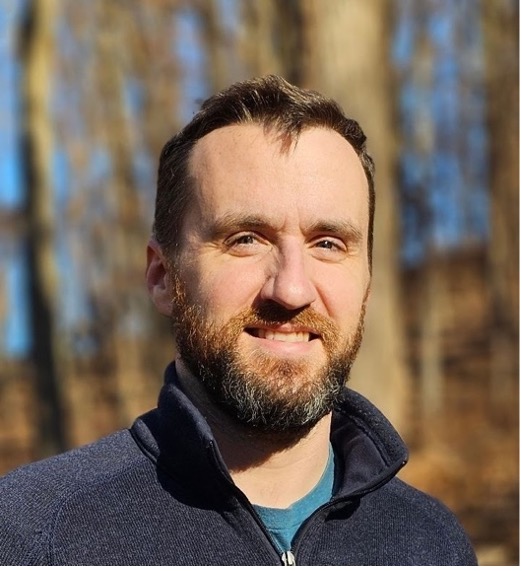
images/author-hinton.jpgFirst author and corresponding author
Department of Biomedical Engineering, Tufts University
An expert and entrepreneur in materials science and additive technologies, with a particular emphasis on regenerative medicine and biotech associated applications. He has commercialized multiple self-invented and co-developed technologies in the biomedical industry. He invented embedded and FRESH printing during graduate school at Carnegie Mellon University and spent a decade developing it, ultimately co-founding FluidForm to bring it to market. He co-founded another company to pioneer lifelike alternative protein materials while working in the Kaplan lab on novel bioprocess development.
Contributions: Conceptualization, methodology, investigation, formal analysis, data curation, validation, visualization, resources, project administration, original draft, review and editing.
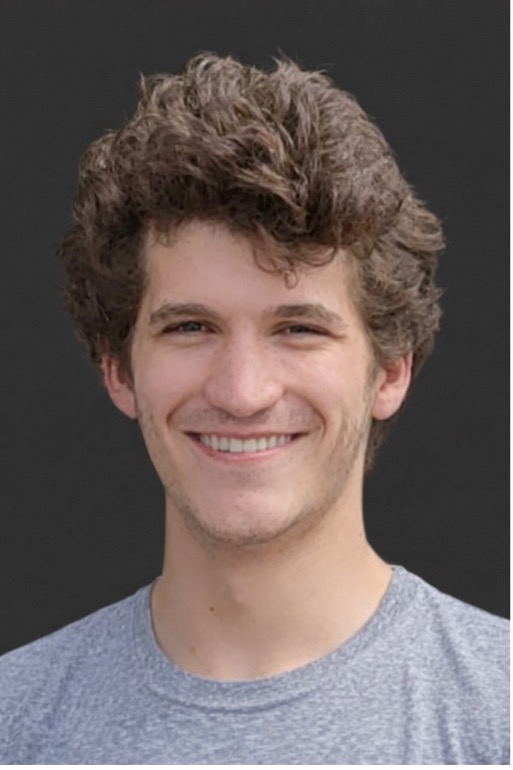
images/author-patten.jpgCo-led design and validation
Department of Biomedical Engineering, Tufts University
A biomedical engineer who graduated from Tufts University, where he conducted research in the Kaplan Lab focused on bioprinting and implantable biomaterials. His work has included materials such as silk, hydroxyapatite, collagen, chitosan, and plant-based proteins. He has contributed to educational outreach in biofabrication through the development of online instructional videos covering topics including electrospinning and additive manufacturing. Riley is an additive manufacturing practitioner with experience designing functional devices using rapid prototyping, and he has applied these skills as a research technician in both academic and startup environments, including Tufts University, MIT, and FluidForm Bio.
Contributions: Conceptualization, methodology, investigation, formal analysis, data curation, validation, visualization, original draft.
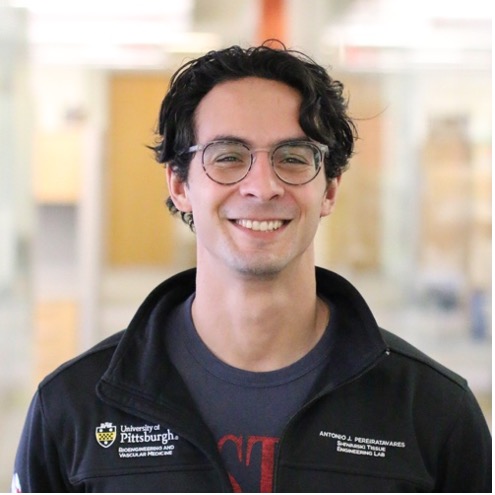
images/author-pereiratavares.jpgTesting, mounts, and adapter development
Department of Bioengineering and Vascular Medicine Institute, University of Pittsburgh
Antonio received his bachelor's degree from Rutgers University and holds a master's degree in biomedical engineering. Following his master's degree, Antonio worked at several tissue engineering startups developing patented large-scale bioreactors for cellular agriculture applications. Now pursuing a PhD in bioengineering within the Shiwarski Tissue Engineering Lab, Antonio's research focuses on designing open-source hardware and software, creating 3D microfluidic models to investigate hemodynamics and clotting factor binding, and leading 3D bioprinting workshops to disseminate bioprinting technology. An avid hockey fan and fitness enthusiast, he enjoys hockey nights at PPG Arena and weightlifting.
Contributions: Investigation, formal analysis, data curation, visualization, review and editing.
images/author-crosby.jpgIndependent validation across machines and materials
Department of Physics, Southwestern University, and Department of Biomedical Engineering, The University of Texas at Austin
Dr. Cody Crosby is an Associate Professor of Engineering at Southwestern University in Georgetown, Texas. He received his Ph.D. in biomedical engineering from the University of Texas at Austin in 2020, his M.S.E in biomedical engineering from UT in 2017, and his B.S. in engineering from Harvey Mudd College in 2015. He specializes in cell-material interactions and developed iPSC-derived vasculature in angiogenic hydrogels during his studies at UT. At Southwestern University, he is working alongside his undergraduate researchers to develop open-source bioprinters and novel reinforced biomaterial inks in his biofabrication laboratory. Dr. Crosby is affiliated with the Biomedical Engineering Society and the Society for Biomaterials and maintains an active interest in undergraduate engineering education.
Contributions: Investigation, data curation, validation, review and editing.
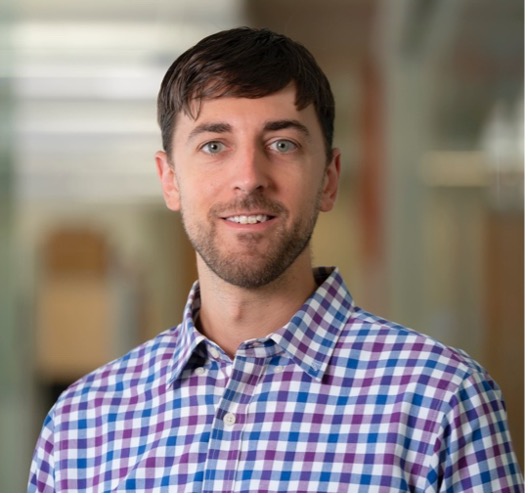
images/author-shiwarski.jpgSenior author and corresponding author
Departments of Bioengineering and Medicine, and Vascular Medicine Institute, University of Pittsburgh · ORCID 0000-0001-6978-303X
Dr. Shiwarski is an Assistant Professor within the Departments of Bioengineering and Medicine at the University of Pittsburgh and Principal Investigator in the Vascular Medicine Institute. He obtained a combined undergraduate degree from Bucknell University in cell biology and biochemistry, a Ph.D. in Biological Sciences and Neuroscience from Carnegie Mellon University and the Center for Neural Basis of Cognition, and completed a postdoctoral fellowship in Biomedical Engineering at Carnegie Mellon University in cellular biomechanics and tissue engineering.
The Shiwarski Tissue Engineering Lab is interested in addressing translation challenges in vascular medicine by integrating advanced 3D bioprinting, regenerative medicine, and microfluidics. Using novel experimental platforms, they investigate relationships between engineered 3D tissue structure, extracellular matrix composition, biomechanical forces, and altered receptor signaling that drives vascular tissue maturation and hypertensive disease pathology. Importantly, the Shiwarski Lab prioritizes developing open-source scientific hardware and software for tissue engineering and cell biology to democratize science innovation, drive interoperability, and propel biomedical translation via reducing cost and improving device functionality. They have published devices for pressure myography (HemoLens), bi-axial stretchers for mechanical characterization, and a series of syringe pump extruders (Replistruders) for 3D bioprinting applications.
Contributions: Conceptualization is not listed; methodology, investigation, formal analysis, data curation, validation, visualization, resources, project administration, funding support, original draft, review and editing.
The Allstruder works because it was handed out early and came back with complaints. The published acknowledgments thank the following people for testing, adopting, and giving feedback on the design.
Vincent Fitzpatrick, Karl Schneider, Enric Casanova-Batlle, Charlie McLean, Tony Tam, Mark Skylar-Scott, Liam Power, Brian Coffin, Jonathan Wright, Martin Sahul, Evelyn Shen, Noé González Rodríguez, Amanda Mejia, Joseph Dorsey, and Matthew Griffin.
Members of the Kaplan, Crosby, and Shiwarski laboratories, and members of the NYU ITP Biofabrication Class.
Build one, tell us what went wrong, or contribute a mount or adapter. Open an issue on GitHub.
Thomas Hinton, thetjhinton@gmail.com
Daniel J. Shiwarski, djs87@pitt.edu
Department of Bioengineering, University of Pittsburgh, Pittsburgh, PA
Competing interests: T.J.H. and D.J.S. have an equity stake in FluidForm Bio, Inc., a startup company commercializing FRESH 3D printing. No other authors declare competing financial interests or personal relationships that could have appeared to influence the work. Biographies reproduced from the open access article under CC BY 4.0.
